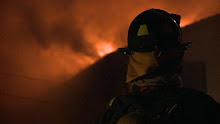
Ok, judging by the recent news story I feel it's again time to discuss the basics of my job. The news story I'm referring to is about the high cost of ambulance bills, and can be found here:
http://www.thedenverchannel.com/news/23557782/detail.html
EMS stands for Emergency Medical Services. Most commonly, this translates into ambulances. There are a number of different ways of providing ambulances to the public. One way is through a private company. This may be a for-profit or a not-for-profit endeavor. Alternatively, the service may be hospital-based, and the profit standpoint depends on the hospital. As an aside, these hospital-based systems don't "only" transport to their own hospital. The most common solution to providing ambulances in Colorado is in fire-based EMS. In this system, the fire department cross-trains its firefighters in EMS and run ambulances as well as engines and trucks. At our department, there is no difference beween who works where--I may work on an engine one day and the ambulance the next. It is a non-profit endeavor.
Now, onto who works on an ambulance. There are three levels of certification. EMT (Emergency Medical Technician)-Basic, EMT-Intermediate, and EMT-Paramedic. EMT-Intermediates are found mostly in rural areas, so I will focus on EMT-Bs and Paramedics. EMTs provide BLS (Basic Life Support). They take vitals, perform exams, provide oxygen, and perform techniques ranging from CPR to IV cannulation to artificial ventilation.
Paramedics are the most advanced form of pre-hospital EMS. They have all the skills of an EMT plus some. They go to school for a longer period of time, and perform more detailed exams. They have a number of drugs they can administer to treat respiratory problems, allergic reactions and cardiac dysrhythmias. They can intubate, perform synchronized cardioversion and defibrillate, among other things.
At our department, an ambulance consists of an EMT and a paramedic, or two paramedics. Some things we can't do: kidnap people against their will, diagnose diseases, make your decisions for you, provide parenting advice or parent your children.
Now, what happens when 911 is called? For a medical emergency, the nearest fire engine and ambulance are dispatched to your location. Why two rigs? There are more engines than ambulances, so an engine will usually reach you first to provide care (remember, EMTs and paramedics are on all the engines). Also, on a seriously ill patient, more hands can help the call run more smoothly. We aim for a response time of under five minutes, and have to be out of the station in under a minute after receiving tones. Want to try it out? Here are two fun ways at home. First, get into the shower. Lather up. Relax. Then start the stop watch and make it out of the shower, dressed and sitting in your car. Don't want to soak your seats? Get into bed. Fall asleep. Deeply asleep. Have your alarm go off at 0230, in the dark. Again, get dressed, out to your car. One minute.
So, we've arrived where you are. A number of things can happen. Usually, you describe your complaint, we evaluate you, and off we go to the hospital. However, there are times where the "patient" isn't the one who called 911. They may not wish to go with us to the hospital, preferring to have someone take them, or they may not wish to go at all. Sometimes this is reasonable, sometimes they are making a poor health decision. Either way, we can't kidnap them. They can refuse, against medical advice and after consultation with our base physician at the emergency department. What we can't do is "paramedic initiated refusals;" that is, refusing to take you to the hospital. If it is a minor injury, we can explain that it may be a better decision to seek care at an urgent care, your personal physician, or have someone drive you to the emergency department. But if you want to go to the ED, we'll take you.
This brings up the question of cost. Yes, it does cost for us to take you to the hospital. Sometimes a lot. No, I don't know how much it will cost. Administration won't tell us. And we've been told that if we do know, we can't tell you. So someone gave you an estimate? Well, it's not based on anything. Your bill is higher? Sorry--it was uninformed. Here's the deal though. When you call 911, you get the jurisdiction covering your area. It's not a "shop around" type of deal. The services that respond are paid by your tax dollars.
So, you ask, if I pay taxes for these services, why isn't my ambulance ride free? Good question. It turns out taxes pay for the stations, salaries, rigs, rig maintenance, keeping our training up to date, etc. It doesn't cover the wear and tear on ambulances, fuel costs, drug costs or other supplies. So we have to charge. Again, we're not making a profit. Additionally, there are health insurance companies to deal with. Some reimburse us only pennies on the dollar. The last average ambulance reimbursement figure I heard thrown around was 30%. This is why fire-based EMS is popular in Colorado. The fire department is supported by a consistant tax base, not by ambulance fees. This is also why so many private ambulance companies go out of business. Imagine running a business where you took up to a 70% loss on every transaction.
Abuse of the 911 system adds to these costs. Think of the number of people, with or without insurance, that take the ambulance frivolously (yeah, there's a lot of them). There's the ones with a cold for three weeks that call at 3am for an ambulance ride. The drunk on the street who we will transport twice in one night. The minor cuts and scrapes, not to mention the "neck pain" patients from car wrecks hoping for an insurance payout. There's people that are "frequent flyers," known to EMS crews and ED staff by name. These aren't unusually sick people, just drunks or those with imaginary illnesses.
These patients spill over into overcrowding in the emergency department. In a place that is supposed to be reserved for life threatening illnesses, nowadays you find a majority of patients that should be seen instead by their primary care doctor. This brings us to another problem--many people lack health insurance to have a primary doctor, and thus use the emergency medical system as their primary care.
As you can see, this is a problem that quickly grows in size and complexity as it is unwrapped. I don't foresee a simple solution--my goal is to educate you to the issues at hand.
Please, just remember a few points.
-We're not "ambulance drivers."
-We're not gunning for a profit. We are healthcare workers concerned about your health.
-Please use common sense before dialing 911. If you have no common sense, please consult someone with some.
-For those of you against healthcare for everyone, remember that next time you or a loved one is waiting for hours in an overcrowded emergency department waiting to be seen.
-If you insist on calling 911 from your cell phone for a car wreck or a person "passed out" in the grass/bus stop/alley and you DON'T stop to render aid or wait for us to show up...I will hunt you down and you will lose phone privileges.
Thanks for reading.
Monday, May 17, 2010

Tuesday, May 11, 2010
Reentry
TJ and I are on the final leg of our journey home. PAP-MIA-JFK-MIN-DEN. It's been a log, hard, heartbreaking and rewarding week. We are both a bit run into the ground, and on top of it TJ has contracted some sort of respiratory gunk.
We feel as though we've been on the ground for a lot longer than a week. It seems weak to say that...I look around at other healthcare providers with a thousand-yard stare, and realize they've only been on the ground for twice our time.
After virgin bloody mary's on one leg of the flight, we suck it up and have a morning commemorative shot of whiskey in Minnesota. It burns in a good way after spending the night at JFK. On the final leg home we recount the highs and lows of the trip. Most are recounted here. Most. Writing this blog, in the past/present tense, I realized that there are some stories that just aren't to be told. I've taken you for the most part day by day through our experience, and I hope this gives you an idea of what it was like. TJ and I agree though, that some stories we carry with us, though seldom share.
I feel as though we've seen humanity at its best and worst this trip. We've seen those operating on the most primitive survival instincts, and those whose compassion only grows in the face of adversity. There have been those that have become adoptive parents to children orphaned by the earthquake. There have been those that have split their families in hopes of self-preservation and a better life for their children. This is a country where adults rarely smile, and never complain. Children innocent to their situation keep smiles alive.
I worry about the mental health component of all this. Everyone we met has some sort of PTSD. It appears that no one sleeps. Some weep silently. Others speak of night terrors and loved ones screaming in their sleep. Our translators speak of even further horrors in outlying refugee camps that have seen little aid.
Coming back, it is odd to take up the life I left here. It is easy to feel guilty for the situation I find myself in. I remind myself often, that I should feel grateful rather than guilty. And a duty to help others. I know that Haiti will remain in my heart and my mind, a place that remains in need long after the media has left. Thanks for reading.
We feel as though we've been on the ground for a lot longer than a week. It seems weak to say that...I look around at other healthcare providers with a thousand-yard stare, and realize they've only been on the ground for twice our time.
After virgin bloody mary's on one leg of the flight, we suck it up and have a morning commemorative shot of whiskey in Minnesota. It burns in a good way after spending the night at JFK. On the final leg home we recount the highs and lows of the trip. Most are recounted here. Most. Writing this blog, in the past/present tense, I realized that there are some stories that just aren't to be told. I've taken you for the most part day by day through our experience, and I hope this gives you an idea of what it was like. TJ and I agree though, that some stories we carry with us, though seldom share.
I feel as though we've seen humanity at its best and worst this trip. We've seen those operating on the most primitive survival instincts, and those whose compassion only grows in the face of adversity. There have been those that have become adoptive parents to children orphaned by the earthquake. There have been those that have split their families in hopes of self-preservation and a better life for their children. This is a country where adults rarely smile, and never complain. Children innocent to their situation keep smiles alive.
I worry about the mental health component of all this. Everyone we met has some sort of PTSD. It appears that no one sleeps. Some weep silently. Others speak of night terrors and loved ones screaming in their sleep. Our translators speak of even further horrors in outlying refugee camps that have seen little aid.
Coming back, it is odd to take up the life I left here. It is easy to feel guilty for the situation I find myself in. I remind myself often, that I should feel grateful rather than guilty. And a duty to help others. I know that Haiti will remain in my heart and my mind, a place that remains in need long after the media has left. Thanks for reading.
Thursday, May 6, 2010
ED
As the sun rises in Port au Prince, rays pierce the otherwise dim field hospital tent and make me squint as I survey the scene. A little boy lies in the exhaustion that follows a seizure, while a young man breathes quietly through a tube in his throat. His mother stands beside him, keeping the flies off his head. It's been an eventful evening.
TJ and I got the night shift at the ED (emergency department) after talking to an Indian doctor serving there, and hearing that they were understaffed at night. Our team leader ok'd it, but only if we'd work the day before and after--a 36 hour shift. Upon hearing our plans, our pediatric ED MD decided to join us.
We arrive at the ED just before shift change. It's located in the compound behind the presidential palace, set up by a medical non-profit. It is comprised of two MASH-style tents set up on the asphalt, without floors. There is no ventilation or A/C. Beds are green mesh collapsable cots, with buckets under them as commodes. Storage boxes and an old desk outside the first tent comprise a rough triage area. Inside, medications and supplies are strewn between a couple of folding tables and some rolling shelves. The dimly lit interior smells of old urine and dried blood.
The staff for the night is seven strong. There is an emergency physician from California, an ACNP from New York, two nurses, the peds ER doc (Dr. M), TJ and me. There are no labs available, and X-rays are hit and miss. The most valuable staff member in the ED is the portable ultrasound machine.
The night starts off slow. There are a few patients with relatively easy dispositions. One patient had three liters of fluid drained from his bladder. Another father was concerned because his soon was pooping crayons. To quote Dr. M, "As we speak, kids all over the world are eating crayons." A couple of minor wounds come to be patched up and are on their way. I'm wondering where this chaos is that people mentioned.
Soon, a lone man comes staggering up to triage. He is soaking wet, wearing only a baggy t-shirt and smelling of feces and urine. And booze. It turns out he was riding his motorcycle and wrecked it, then walked an untold distance to the ED. No one knows if he lost his pants or if he ever had them. He gets paper scrubs and is bundled off to X-ray. My initial thought was, "ah, now it feels like an ED!" but in reality, we see very few inebriated patients.
In the midst of caring for a few minor patients, we hear the squeal of tires outside. I walk out the front to see a dusty pickup out front, with a couple of people sitting in the back staring at us. In the bed of the truck lays an unconscious man. At first glance I thought he was dead. The NP and I grabbed a stretcher (think MASH) and manhandled the patient on to it, who was guppy breathing (really, think of how a guppy breathes out of water). Once inside, he was found to have a severely low blood pressure and blood sugar--hypovolemia and hypoglycemia. Obtaining a peripheral IV was a near impossible task, and an internal jugular line was finally established with the assistance of the ultrasound. Fluids and sugar were started, while the MD worked on a diagnosis. Our patient looked like a cast member of Outbreak--red, sunken eyes and flaking skin.
From there, we treated a patient with catatonic schizophrenia, two minor asthmatics, a UTI and an elbow relocation. Most disturbing was the woman with metastasized breast cancer--our only possible treatment were to give comfort analgesics and release her.
A father rushes in, carrying his limp infant son. They came from a nearby clinic, unable to care of the child. He's been having trouble breathing, and quickly draws the attention of all of us. We grab the ED's only oxygen tank and start the child on a nebulizer. At almost the same time another pickup rolls up out front. Another unconscious male. Another double take to make sure he's not dead.
It's an asthmatic this time. His lungs are so tight he's not moving any air. He is intubated on the floor of the ED, among the flies and buckets serving as toilets. As he is moved to a bed we are alternately bagging him (breathing for him) and squirting an asthma rescue inhaler down his tube--we're out of other asthma medications. He does get steroids through an IV line. He's been sedated, and still can't breath on his own. There's no ventilator in the ED either, and there is the sick infant still. The nurses give the family instructions on how to use the bag valve mask to breath for their loved one.
Amidst the infant, now seizing, and the family bagging the asthmatic, another patient arrives. A boy of no more than fifteen comes in heavily bandaged and accompanied by his father. He has been beaten by a crowd, and treated at an outlying clinic. The lacerations covering his face and head were rudimentarily sutured. Slowly, we remove the bandages covering his eye. Under it is a bloody mess. It looks like hamburger--I'm not even sure the eyeball is intact. He has lacerations to his upper and lower eyelids, such that they split apart and overlap each other. The doc brainstorms at the best way to repair his eye.
Meanwhile, the infant boy continues to struggle. It is lucky that we have the pediatric ED doc with us tonight. He watches over us as we work on stopping his seizures, and improving his breathing. There is only one oxygen tank for the now two patients that need it. TJ disappears, and returns sometime later lugging another oxygen tank that he "liberated" from the ICU. The infant has stopped seizing, for now, but we still need to get an IV in him for medications.
The family of the asthmatic isn't doing an adequate job bagging him. We move him next to the infant, and will take turns the rest of the evening breathing for him. Keeping him alive. I take the first shift.
In another stroke of luck, an ophthalmological surgeon arrived in our camp that morning. Technology helps us to save the boys eye. An iphone picture to the camp gives the surgeon an idea of what we have. He relays back that he can fix it. From there, he wakes up the head doctor of the clinic, who in turn rouses the chief of the special forces for an escort--the streets of Port au Prince aren't safe after dark. Soon, the surgeon arrives at our ED. I help sedate the patient while we scrounge up a suture kit. We assisted and watched as this amazing surgeon pieced an eyelid back together. It turns out the eyeball is intact, and the damage is to the tissue around it. Stitch by stitch, a perfect pair of eyelids reappear. Soon, the boy is resting quietly. Hopefully, he'll have few scars and full eyesight.
The infant boy, on the other hand, was getting worse. He was in status seizure now--a seizure that doesn't stop. His brain was slowly cooking. No one was able to get an IV in him--EJ, peripheral, femoral, nothing was working. His legs were blistered from a previous clinics IM administration, and our ED was out of rectal benzos. With much resignation, the decision for an IO--a needle directly into the boen--was made. The concern was of osteomyelitis, a bone infection. For now, that was secondary to the seizures. There were only two realistic places on this patient for an IO--the tibial plateau of each leg. Too low and the bone may crack. Too high, and the risk is run of fracturing the growth plate. The doctor made his drill....and missed it. The drill was passed to TJ, with one chance left to get an IV in order to stop the seizures in this infant. I'm proud and happy to say that TJ got the IO in successfully. Medication was given, and the seizures were stopped. He needed more definitive care, but the only NICU in the region wasn't accepting patients.
The asthmatic patient is still not breathing on his own. Worse yet, he is exhibiting deceberate posturing--a sign of serious brain injury. The MD and NP discuss discontinuing ventilation and providing palliative care--allowing the patient to die. They are worried that the lack of oxygen injured the brain beyond repair. For the moment, we continue bagging him.
Around 3 AM, the infant was resting somewhat quietly. The sickly patient with the low blood sugar was starting to come around after three liters of fluid and 3 administrations of sugar. Suddenly, gunshots shatter the silence outside, reminding us of where we are. Surprisingly, no trauma comes of it.
As the first rays of sunshine begin to penetrate the plaza, amazing things begin to happen with the asthmatic. His lungs continue to clear. His posturing stops. As his sedation wears off, he even begins to fight the tube. As he wakes up, he is even able to follow basic commands! This is a patient we feared was brain dead. As a further test, we give him the chance to breath on his own, albiet through the tube.
Our drunk wanders through the sleepy ED, having slept through the night's chaos on a cot on the floor. He smiles at us, clutching the X-ray of his bruised, but unbroken arm. X-ray in hand, he wanders out the front door and into the sun.
The shift is coming to an end, and it is full of mixed feelings. The asthmatic is breathing on his own, and should be discharged soon. The first comatose patient will likely remain in the hospital for observation, but is now up and taking the first shaking steps on his own. His suspected diagnosis is end-stage AIDS. The boy with the eye laceration has gone home with his father. Our only loose end is the infant. It remains to seen if his seizures will continue to be controlled. His lungs are clearing at least. He will remain in the ED, outcome unknown.
For us, it is time for us to rejoin the sunshine. Clinic starts soon, and there are many patients to see.
TJ and I got the night shift at the ED (emergency department) after talking to an Indian doctor serving there, and hearing that they were understaffed at night. Our team leader ok'd it, but only if we'd work the day before and after--a 36 hour shift. Upon hearing our plans, our pediatric ED MD decided to join us.
We arrive at the ED just before shift change. It's located in the compound behind the presidential palace, set up by a medical non-profit. It is comprised of two MASH-style tents set up on the asphalt, without floors. There is no ventilation or A/C. Beds are green mesh collapsable cots, with buckets under them as commodes. Storage boxes and an old desk outside the first tent comprise a rough triage area. Inside, medications and supplies are strewn between a couple of folding tables and some rolling shelves. The dimly lit interior smells of old urine and dried blood.
The staff for the night is seven strong. There is an emergency physician from California, an ACNP from New York, two nurses, the peds ER doc (Dr. M), TJ and me. There are no labs available, and X-rays are hit and miss. The most valuable staff member in the ED is the portable ultrasound machine.
The night starts off slow. There are a few patients with relatively easy dispositions. One patient had three liters of fluid drained from his bladder. Another father was concerned because his soon was pooping crayons. To quote Dr. M, "As we speak, kids all over the world are eating crayons." A couple of minor wounds come to be patched up and are on their way. I'm wondering where this chaos is that people mentioned.
Soon, a lone man comes staggering up to triage. He is soaking wet, wearing only a baggy t-shirt and smelling of feces and urine. And booze. It turns out he was riding his motorcycle and wrecked it, then walked an untold distance to the ED. No one knows if he lost his pants or if he ever had them. He gets paper scrubs and is bundled off to X-ray. My initial thought was, "ah, now it feels like an ED!" but in reality, we see very few inebriated patients.
In the midst of caring for a few minor patients, we hear the squeal of tires outside. I walk out the front to see a dusty pickup out front, with a couple of people sitting in the back staring at us. In the bed of the truck lays an unconscious man. At first glance I thought he was dead. The NP and I grabbed a stretcher (think MASH) and manhandled the patient on to it, who was guppy breathing (really, think of how a guppy breathes out of water). Once inside, he was found to have a severely low blood pressure and blood sugar--hypovolemia and hypoglycemia. Obtaining a peripheral IV was a near impossible task, and an internal jugular line was finally established with the assistance of the ultrasound. Fluids and sugar were started, while the MD worked on a diagnosis. Our patient looked like a cast member of Outbreak--red, sunken eyes and flaking skin.
From there, we treated a patient with catatonic schizophrenia, two minor asthmatics, a UTI and an elbow relocation. Most disturbing was the woman with metastasized breast cancer--our only possible treatment were to give comfort analgesics and release her.
A father rushes in, carrying his limp infant son. They came from a nearby clinic, unable to care of the child. He's been having trouble breathing, and quickly draws the attention of all of us. We grab the ED's only oxygen tank and start the child on a nebulizer. At almost the same time another pickup rolls up out front. Another unconscious male. Another double take to make sure he's not dead.
It's an asthmatic this time. His lungs are so tight he's not moving any air. He is intubated on the floor of the ED, among the flies and buckets serving as toilets. As he is moved to a bed we are alternately bagging him (breathing for him) and squirting an asthma rescue inhaler down his tube--we're out of other asthma medications. He does get steroids through an IV line. He's been sedated, and still can't breath on his own. There's no ventilator in the ED either, and there is the sick infant still. The nurses give the family instructions on how to use the bag valve mask to breath for their loved one.
Amidst the infant, now seizing, and the family bagging the asthmatic, another patient arrives. A boy of no more than fifteen comes in heavily bandaged and accompanied by his father. He has been beaten by a crowd, and treated at an outlying clinic. The lacerations covering his face and head were rudimentarily sutured. Slowly, we remove the bandages covering his eye. Under it is a bloody mess. It looks like hamburger--I'm not even sure the eyeball is intact. He has lacerations to his upper and lower eyelids, such that they split apart and overlap each other. The doc brainstorms at the best way to repair his eye.
Meanwhile, the infant boy continues to struggle. It is lucky that we have the pediatric ED doc with us tonight. He watches over us as we work on stopping his seizures, and improving his breathing. There is only one oxygen tank for the now two patients that need it. TJ disappears, and returns sometime later lugging another oxygen tank that he "liberated" from the ICU. The infant has stopped seizing, for now, but we still need to get an IV in him for medications.
The family of the asthmatic isn't doing an adequate job bagging him. We move him next to the infant, and will take turns the rest of the evening breathing for him. Keeping him alive. I take the first shift.
In another stroke of luck, an ophthalmological surgeon arrived in our camp that morning. Technology helps us to save the boys eye. An iphone picture to the camp gives the surgeon an idea of what we have. He relays back that he can fix it. From there, he wakes up the head doctor of the clinic, who in turn rouses the chief of the special forces for an escort--the streets of Port au Prince aren't safe after dark. Soon, the surgeon arrives at our ED. I help sedate the patient while we scrounge up a suture kit. We assisted and watched as this amazing surgeon pieced an eyelid back together. It turns out the eyeball is intact, and the damage is to the tissue around it. Stitch by stitch, a perfect pair of eyelids reappear. Soon, the boy is resting quietly. Hopefully, he'll have few scars and full eyesight.
The infant boy, on the other hand, was getting worse. He was in status seizure now--a seizure that doesn't stop. His brain was slowly cooking. No one was able to get an IV in him--EJ, peripheral, femoral, nothing was working. His legs were blistered from a previous clinics IM administration, and our ED was out of rectal benzos. With much resignation, the decision for an IO--a needle directly into the boen--was made. The concern was of osteomyelitis, a bone infection. For now, that was secondary to the seizures. There were only two realistic places on this patient for an IO--the tibial plateau of each leg. Too low and the bone may crack. Too high, and the risk is run of fracturing the growth plate. The doctor made his drill....and missed it. The drill was passed to TJ, with one chance left to get an IV in order to stop the seizures in this infant. I'm proud and happy to say that TJ got the IO in successfully. Medication was given, and the seizures were stopped. He needed more definitive care, but the only NICU in the region wasn't accepting patients.
The asthmatic patient is still not breathing on his own. Worse yet, he is exhibiting deceberate posturing--a sign of serious brain injury. The MD and NP discuss discontinuing ventilation and providing palliative care--allowing the patient to die. They are worried that the lack of oxygen injured the brain beyond repair. For the moment, we continue bagging him.
Around 3 AM, the infant was resting somewhat quietly. The sickly patient with the low blood sugar was starting to come around after three liters of fluid and 3 administrations of sugar. Suddenly, gunshots shatter the silence outside, reminding us of where we are. Surprisingly, no trauma comes of it.
As the first rays of sunshine begin to penetrate the plaza, amazing things begin to happen with the asthmatic. His lungs continue to clear. His posturing stops. As his sedation wears off, he even begins to fight the tube. As he wakes up, he is even able to follow basic commands! This is a patient we feared was brain dead. As a further test, we give him the chance to breath on his own, albiet through the tube.
Our drunk wanders through the sleepy ED, having slept through the night's chaos on a cot on the floor. He smiles at us, clutching the X-ray of his bruised, but unbroken arm. X-ray in hand, he wanders out the front door and into the sun.
The shift is coming to an end, and it is full of mixed feelings. The asthmatic is breathing on his own, and should be discharged soon. The first comatose patient will likely remain in the hospital for observation, but is now up and taking the first shaking steps on his own. His suspected diagnosis is end-stage AIDS. The boy with the eye laceration has gone home with his father. Our only loose end is the infant. It remains to seen if his seizures will continue to be controlled. His lungs are clearing at least. He will remain in the ED, outcome unknown.
For us, it is time for us to rejoin the sunshine. Clinic starts soon, and there are many patients to see.
Mer-MAN
The engine was on scene for report of a gas leak. Soon after their arrival, they called for a medic unit for an "unconscious patient" in a bedroom. We responded.
I'm not sure if the "unconscious patient" regained consciousness prior to our arrival, or was conscious the whole time. Suffice to say, when we arrived the "unconscious patient" was transformed into naked-guy-covered-in-poo.
Now, this gentleman was laying on a bare mattress in his room. It was cold out, so he had the oven on and the door open to heat the place. He was yelling at the engine crew and trying unsuccessfully to maintain a seated position. The man may have had a *bit* to drink today.
Our conversation went nowhere.
"Sir, why are you naked?"
"Who are you?!"
"I'm a paramedic. How are you feeling tonight?"
"Where are my pants?"
"What color are they?"
"Who are you?"
"Are we playing the question game?"
It turns out we weren't. Our patient had to come with us (he clearly couldn't take care of himself on his own) and so someone found a black pair of sweatpants for him.
His efforts to put them on were less than successful. He'd line himself up with the pants, bit his lip in concentration.....and in one quick motion shove both legs into one leg of the sweatpants. From there, he'd fall back on the bed and flop for a moment like a merman from the sea of poo. Repeat twice.
We finally intervened, only to realize the pants were as covered in poo as he was. One hospital gown and some awkward assisted steps later, he was on the pram.
The gentleman had only one request before we left for the hospital--his Louis L'Amour novel, so he'd have something to read.
I'm not sure if the "unconscious patient" regained consciousness prior to our arrival, or was conscious the whole time. Suffice to say, when we arrived the "unconscious patient" was transformed into naked-guy-covered-in-poo.
Now, this gentleman was laying on a bare mattress in his room. It was cold out, so he had the oven on and the door open to heat the place. He was yelling at the engine crew and trying unsuccessfully to maintain a seated position. The man may have had a *bit* to drink today.
Our conversation went nowhere.
"Sir, why are you naked?"
"Who are you?!"
"I'm a paramedic. How are you feeling tonight?"
"Where are my pants?"
"What color are they?"
"Who are you?"
"Are we playing the question game?"
It turns out we weren't. Our patient had to come with us (he clearly couldn't take care of himself on his own) and so someone found a black pair of sweatpants for him.
His efforts to put them on were less than successful. He'd line himself up with the pants, bit his lip in concentration.....and in one quick motion shove both legs into one leg of the sweatpants. From there, he'd fall back on the bed and flop for a moment like a merman from the sea of poo. Repeat twice.
We finally intervened, only to realize the pants were as covered in poo as he was. One hospital gown and some awkward assisted steps later, he was on the pram.
The gentleman had only one request before we left for the hospital--his Louis L'Amour novel, so he'd have something to read.
Subscribe to:
Comments (Atom)