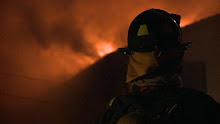
TJ and I are on the final leg of our journey home. PAP-MIA-JFK-MIN-DEN. It's been a log, hard, heartbreaking and rewarding week. We are both a bit run into the ground, and on top of it TJ has contracted some sort of respiratory gunk.
We feel as though we've been on the ground for a lot longer than a week. It seems weak to say that...I look around at other healthcare providers with a thousand-yard stare, and realize they've only been on the ground for twice our time.
After virgin bloody mary's on one leg of the flight, we suck it up and have a morning commemorative shot of whiskey in Minnesota. It burns in a good way after spending the night at JFK. On the final leg home we recount the highs and lows of the trip. Most are recounted here. Most. Writing this blog, in the past/present tense, I realized that there are some stories that just aren't to be told. I've taken you for the most part day by day through our experience, and I hope this gives you an idea of what it was like. TJ and I agree though, that some stories we carry with us, though seldom share.
I feel as though we've seen humanity at its best and worst this trip. We've seen those operating on the most primitive survival instincts, and those whose compassion only grows in the face of adversity. There have been those that have become adoptive parents to children orphaned by the earthquake. There have been those that have split their families in hopes of self-preservation and a better life for their children. This is a country where adults rarely smile, and never complain. Children innocent to their situation keep smiles alive.
I worry about the mental health component of all this. Everyone we met has some sort of PTSD. It appears that no one sleeps. Some weep silently. Others speak of night terrors and loved ones screaming in their sleep. Our translators speak of even further horrors in outlying refugee camps that have seen little aid.
Coming back, it is odd to take up the life I left here. It is easy to feel guilty for the situation I find myself in. I remind myself often, that I should feel grateful rather than guilty. And a duty to help others. I know that Haiti will remain in my heart and my mind, a place that remains in need long after the media has left. Thanks for reading.
Showing posts with label Haiti. Show all posts
Showing posts with label Haiti. Show all posts
Tuesday, May 11, 2010

Thursday, May 6, 2010
ED
As the sun rises in Port au Prince, rays pierce the otherwise dim field hospital tent and make me squint as I survey the scene. A little boy lies in the exhaustion that follows a seizure, while a young man breathes quietly through a tube in his throat. His mother stands beside him, keeping the flies off his head. It's been an eventful evening.
TJ and I got the night shift at the ED (emergency department) after talking to an Indian doctor serving there, and hearing that they were understaffed at night. Our team leader ok'd it, but only if we'd work the day before and after--a 36 hour shift. Upon hearing our plans, our pediatric ED MD decided to join us.
We arrive at the ED just before shift change. It's located in the compound behind the presidential palace, set up by a medical non-profit. It is comprised of two MASH-style tents set up on the asphalt, without floors. There is no ventilation or A/C. Beds are green mesh collapsable cots, with buckets under them as commodes. Storage boxes and an old desk outside the first tent comprise a rough triage area. Inside, medications and supplies are strewn between a couple of folding tables and some rolling shelves. The dimly lit interior smells of old urine and dried blood.
The staff for the night is seven strong. There is an emergency physician from California, an ACNP from New York, two nurses, the peds ER doc (Dr. M), TJ and me. There are no labs available, and X-rays are hit and miss. The most valuable staff member in the ED is the portable ultrasound machine.
The night starts off slow. There are a few patients with relatively easy dispositions. One patient had three liters of fluid drained from his bladder. Another father was concerned because his soon was pooping crayons. To quote Dr. M, "As we speak, kids all over the world are eating crayons." A couple of minor wounds come to be patched up and are on their way. I'm wondering where this chaos is that people mentioned.
Soon, a lone man comes staggering up to triage. He is soaking wet, wearing only a baggy t-shirt and smelling of feces and urine. And booze. It turns out he was riding his motorcycle and wrecked it, then walked an untold distance to the ED. No one knows if he lost his pants or if he ever had them. He gets paper scrubs and is bundled off to X-ray. My initial thought was, "ah, now it feels like an ED!" but in reality, we see very few inebriated patients.
In the midst of caring for a few minor patients, we hear the squeal of tires outside. I walk out the front to see a dusty pickup out front, with a couple of people sitting in the back staring at us. In the bed of the truck lays an unconscious man. At first glance I thought he was dead. The NP and I grabbed a stretcher (think MASH) and manhandled the patient on to it, who was guppy breathing (really, think of how a guppy breathes out of water). Once inside, he was found to have a severely low blood pressure and blood sugar--hypovolemia and hypoglycemia. Obtaining a peripheral IV was a near impossible task, and an internal jugular line was finally established with the assistance of the ultrasound. Fluids and sugar were started, while the MD worked on a diagnosis. Our patient looked like a cast member of Outbreak--red, sunken eyes and flaking skin.
From there, we treated a patient with catatonic schizophrenia, two minor asthmatics, a UTI and an elbow relocation. Most disturbing was the woman with metastasized breast cancer--our only possible treatment were to give comfort analgesics and release her.
A father rushes in, carrying his limp infant son. They came from a nearby clinic, unable to care of the child. He's been having trouble breathing, and quickly draws the attention of all of us. We grab the ED's only oxygen tank and start the child on a nebulizer. At almost the same time another pickup rolls up out front. Another unconscious male. Another double take to make sure he's not dead.
It's an asthmatic this time. His lungs are so tight he's not moving any air. He is intubated on the floor of the ED, among the flies and buckets serving as toilets. As he is moved to a bed we are alternately bagging him (breathing for him) and squirting an asthma rescue inhaler down his tube--we're out of other asthma medications. He does get steroids through an IV line. He's been sedated, and still can't breath on his own. There's no ventilator in the ED either, and there is the sick infant still. The nurses give the family instructions on how to use the bag valve mask to breath for their loved one.
Amidst the infant, now seizing, and the family bagging the asthmatic, another patient arrives. A boy of no more than fifteen comes in heavily bandaged and accompanied by his father. He has been beaten by a crowd, and treated at an outlying clinic. The lacerations covering his face and head were rudimentarily sutured. Slowly, we remove the bandages covering his eye. Under it is a bloody mess. It looks like hamburger--I'm not even sure the eyeball is intact. He has lacerations to his upper and lower eyelids, such that they split apart and overlap each other. The doc brainstorms at the best way to repair his eye.
Meanwhile, the infant boy continues to struggle. It is lucky that we have the pediatric ED doc with us tonight. He watches over us as we work on stopping his seizures, and improving his breathing. There is only one oxygen tank for the now two patients that need it. TJ disappears, and returns sometime later lugging another oxygen tank that he "liberated" from the ICU. The infant has stopped seizing, for now, but we still need to get an IV in him for medications.
The family of the asthmatic isn't doing an adequate job bagging him. We move him next to the infant, and will take turns the rest of the evening breathing for him. Keeping him alive. I take the first shift.
In another stroke of luck, an ophthalmological surgeon arrived in our camp that morning. Technology helps us to save the boys eye. An iphone picture to the camp gives the surgeon an idea of what we have. He relays back that he can fix it. From there, he wakes up the head doctor of the clinic, who in turn rouses the chief of the special forces for an escort--the streets of Port au Prince aren't safe after dark. Soon, the surgeon arrives at our ED. I help sedate the patient while we scrounge up a suture kit. We assisted and watched as this amazing surgeon pieced an eyelid back together. It turns out the eyeball is intact, and the damage is to the tissue around it. Stitch by stitch, a perfect pair of eyelids reappear. Soon, the boy is resting quietly. Hopefully, he'll have few scars and full eyesight.
The infant boy, on the other hand, was getting worse. He was in status seizure now--a seizure that doesn't stop. His brain was slowly cooking. No one was able to get an IV in him--EJ, peripheral, femoral, nothing was working. His legs were blistered from a previous clinics IM administration, and our ED was out of rectal benzos. With much resignation, the decision for an IO--a needle directly into the boen--was made. The concern was of osteomyelitis, a bone infection. For now, that was secondary to the seizures. There were only two realistic places on this patient for an IO--the tibial plateau of each leg. Too low and the bone may crack. Too high, and the risk is run of fracturing the growth plate. The doctor made his drill....and missed it. The drill was passed to TJ, with one chance left to get an IV in order to stop the seizures in this infant. I'm proud and happy to say that TJ got the IO in successfully. Medication was given, and the seizures were stopped. He needed more definitive care, but the only NICU in the region wasn't accepting patients.
The asthmatic patient is still not breathing on his own. Worse yet, he is exhibiting deceberate posturing--a sign of serious brain injury. The MD and NP discuss discontinuing ventilation and providing palliative care--allowing the patient to die. They are worried that the lack of oxygen injured the brain beyond repair. For the moment, we continue bagging him.
Around 3 AM, the infant was resting somewhat quietly. The sickly patient with the low blood sugar was starting to come around after three liters of fluid and 3 administrations of sugar. Suddenly, gunshots shatter the silence outside, reminding us of where we are. Surprisingly, no trauma comes of it.
As the first rays of sunshine begin to penetrate the plaza, amazing things begin to happen with the asthmatic. His lungs continue to clear. His posturing stops. As his sedation wears off, he even begins to fight the tube. As he wakes up, he is even able to follow basic commands! This is a patient we feared was brain dead. As a further test, we give him the chance to breath on his own, albiet through the tube.
Our drunk wanders through the sleepy ED, having slept through the night's chaos on a cot on the floor. He smiles at us, clutching the X-ray of his bruised, but unbroken arm. X-ray in hand, he wanders out the front door and into the sun.
The shift is coming to an end, and it is full of mixed feelings. The asthmatic is breathing on his own, and should be discharged soon. The first comatose patient will likely remain in the hospital for observation, but is now up and taking the first shaking steps on his own. His suspected diagnosis is end-stage AIDS. The boy with the eye laceration has gone home with his father. Our only loose end is the infant. It remains to seen if his seizures will continue to be controlled. His lungs are clearing at least. He will remain in the ED, outcome unknown.
For us, it is time for us to rejoin the sunshine. Clinic starts soon, and there are many patients to see.
TJ and I got the night shift at the ED (emergency department) after talking to an Indian doctor serving there, and hearing that they were understaffed at night. Our team leader ok'd it, but only if we'd work the day before and after--a 36 hour shift. Upon hearing our plans, our pediatric ED MD decided to join us.
We arrive at the ED just before shift change. It's located in the compound behind the presidential palace, set up by a medical non-profit. It is comprised of two MASH-style tents set up on the asphalt, without floors. There is no ventilation or A/C. Beds are green mesh collapsable cots, with buckets under them as commodes. Storage boxes and an old desk outside the first tent comprise a rough triage area. Inside, medications and supplies are strewn between a couple of folding tables and some rolling shelves. The dimly lit interior smells of old urine and dried blood.
The staff for the night is seven strong. There is an emergency physician from California, an ACNP from New York, two nurses, the peds ER doc (Dr. M), TJ and me. There are no labs available, and X-rays are hit and miss. The most valuable staff member in the ED is the portable ultrasound machine.
The night starts off slow. There are a few patients with relatively easy dispositions. One patient had three liters of fluid drained from his bladder. Another father was concerned because his soon was pooping crayons. To quote Dr. M, "As we speak, kids all over the world are eating crayons." A couple of minor wounds come to be patched up and are on their way. I'm wondering where this chaos is that people mentioned.
Soon, a lone man comes staggering up to triage. He is soaking wet, wearing only a baggy t-shirt and smelling of feces and urine. And booze. It turns out he was riding his motorcycle and wrecked it, then walked an untold distance to the ED. No one knows if he lost his pants or if he ever had them. He gets paper scrubs and is bundled off to X-ray. My initial thought was, "ah, now it feels like an ED!" but in reality, we see very few inebriated patients.
In the midst of caring for a few minor patients, we hear the squeal of tires outside. I walk out the front to see a dusty pickup out front, with a couple of people sitting in the back staring at us. In the bed of the truck lays an unconscious man. At first glance I thought he was dead. The NP and I grabbed a stretcher (think MASH) and manhandled the patient on to it, who was guppy breathing (really, think of how a guppy breathes out of water). Once inside, he was found to have a severely low blood pressure and blood sugar--hypovolemia and hypoglycemia. Obtaining a peripheral IV was a near impossible task, and an internal jugular line was finally established with the assistance of the ultrasound. Fluids and sugar were started, while the MD worked on a diagnosis. Our patient looked like a cast member of Outbreak--red, sunken eyes and flaking skin.
From there, we treated a patient with catatonic schizophrenia, two minor asthmatics, a UTI and an elbow relocation. Most disturbing was the woman with metastasized breast cancer--our only possible treatment were to give comfort analgesics and release her.
A father rushes in, carrying his limp infant son. They came from a nearby clinic, unable to care of the child. He's been having trouble breathing, and quickly draws the attention of all of us. We grab the ED's only oxygen tank and start the child on a nebulizer. At almost the same time another pickup rolls up out front. Another unconscious male. Another double take to make sure he's not dead.
It's an asthmatic this time. His lungs are so tight he's not moving any air. He is intubated on the floor of the ED, among the flies and buckets serving as toilets. As he is moved to a bed we are alternately bagging him (breathing for him) and squirting an asthma rescue inhaler down his tube--we're out of other asthma medications. He does get steroids through an IV line. He's been sedated, and still can't breath on his own. There's no ventilator in the ED either, and there is the sick infant still. The nurses give the family instructions on how to use the bag valve mask to breath for their loved one.
Amidst the infant, now seizing, and the family bagging the asthmatic, another patient arrives. A boy of no more than fifteen comes in heavily bandaged and accompanied by his father. He has been beaten by a crowd, and treated at an outlying clinic. The lacerations covering his face and head were rudimentarily sutured. Slowly, we remove the bandages covering his eye. Under it is a bloody mess. It looks like hamburger--I'm not even sure the eyeball is intact. He has lacerations to his upper and lower eyelids, such that they split apart and overlap each other. The doc brainstorms at the best way to repair his eye.
Meanwhile, the infant boy continues to struggle. It is lucky that we have the pediatric ED doc with us tonight. He watches over us as we work on stopping his seizures, and improving his breathing. There is only one oxygen tank for the now two patients that need it. TJ disappears, and returns sometime later lugging another oxygen tank that he "liberated" from the ICU. The infant has stopped seizing, for now, but we still need to get an IV in him for medications.
The family of the asthmatic isn't doing an adequate job bagging him. We move him next to the infant, and will take turns the rest of the evening breathing for him. Keeping him alive. I take the first shift.
In another stroke of luck, an ophthalmological surgeon arrived in our camp that morning. Technology helps us to save the boys eye. An iphone picture to the camp gives the surgeon an idea of what we have. He relays back that he can fix it. From there, he wakes up the head doctor of the clinic, who in turn rouses the chief of the special forces for an escort--the streets of Port au Prince aren't safe after dark. Soon, the surgeon arrives at our ED. I help sedate the patient while we scrounge up a suture kit. We assisted and watched as this amazing surgeon pieced an eyelid back together. It turns out the eyeball is intact, and the damage is to the tissue around it. Stitch by stitch, a perfect pair of eyelids reappear. Soon, the boy is resting quietly. Hopefully, he'll have few scars and full eyesight.
The infant boy, on the other hand, was getting worse. He was in status seizure now--a seizure that doesn't stop. His brain was slowly cooking. No one was able to get an IV in him--EJ, peripheral, femoral, nothing was working. His legs were blistered from a previous clinics IM administration, and our ED was out of rectal benzos. With much resignation, the decision for an IO--a needle directly into the boen--was made. The concern was of osteomyelitis, a bone infection. For now, that was secondary to the seizures. There were only two realistic places on this patient for an IO--the tibial plateau of each leg. Too low and the bone may crack. Too high, and the risk is run of fracturing the growth plate. The doctor made his drill....and missed it. The drill was passed to TJ, with one chance left to get an IV in order to stop the seizures in this infant. I'm proud and happy to say that TJ got the IO in successfully. Medication was given, and the seizures were stopped. He needed more definitive care, but the only NICU in the region wasn't accepting patients.
The asthmatic patient is still not breathing on his own. Worse yet, he is exhibiting deceberate posturing--a sign of serious brain injury. The MD and NP discuss discontinuing ventilation and providing palliative care--allowing the patient to die. They are worried that the lack of oxygen injured the brain beyond repair. For the moment, we continue bagging him.
Around 3 AM, the infant was resting somewhat quietly. The sickly patient with the low blood sugar was starting to come around after three liters of fluid and 3 administrations of sugar. Suddenly, gunshots shatter the silence outside, reminding us of where we are. Surprisingly, no trauma comes of it.
As the first rays of sunshine begin to penetrate the plaza, amazing things begin to happen with the asthmatic. His lungs continue to clear. His posturing stops. As his sedation wears off, he even begins to fight the tube. As he wakes up, he is even able to follow basic commands! This is a patient we feared was brain dead. As a further test, we give him the chance to breath on his own, albiet through the tube.
Our drunk wanders through the sleepy ED, having slept through the night's chaos on a cot on the floor. He smiles at us, clutching the X-ray of his bruised, but unbroken arm. X-ray in hand, he wanders out the front door and into the sun.
The shift is coming to an end, and it is full of mixed feelings. The asthmatic is breathing on his own, and should be discharged soon. The first comatose patient will likely remain in the hospital for observation, but is now up and taking the first shaking steps on his own. His suspected diagnosis is end-stage AIDS. The boy with the eye laceration has gone home with his father. Our only loose end is the infant. It remains to seen if his seizures will continue to be controlled. His lungs are clearing at least. He will remain in the ED, outcome unknown.
For us, it is time for us to rejoin the sunshine. Clinic starts soon, and there are many patients to see.
Wednesday, April 7, 2010
Day 4
Today is a full, hard and fulfilling day at the clinic. There are three of us in station one, a primary tent. It is a pop-up shelter, like the one you'd find at a wedding or catered outdoor event. There's canvas walls and roof, and it seems fairly well anchored. The floor is dirt, as we're in the courtyard of the police compound. There are old, rubber and steel patio lounges that serve as patient beds. We sit on old home depot buckets. At the rear of the tent is the "pharmacy": two folding tables covered in medications (majority labeled in Spanish) that we try futilely to organize each morning. There is a rapidly dwindling supply of oral-rehydration electrolytes, cough syrup, Ibuprofun, antibiotics, antifungal/antibacterial creams, and antihypertensives. It seems we are always out of what we need most.
Joining me in the tent is TJ, and our hero of the week, Dr. C. Dr. C is a primary doc....a really really smart doc. He leads station one, and is more than patient with TJ and I as we get his input on patients.
The patients...well, there's a seemingly endless stream. They line up outside the gates hours before the sun rises. There, Haitian volunteers "triage" the patients, but they really just provide them with slips of paper with their name on it that shows their place in line. Once outside our tent, there is a second line, with a few chairs to sit in. This is were TJ and I try to scan, and pick out the sick kids. I mean, the really sick, comatose in their mother's arms sick. There's usually 3-4 of those a day.
With the help of translators, we see patients as fast as we can. There is minimal paperwork, which is nice and means we can see more people quickly--around 500 a day.
There are a few complaints that seem to permeate the entire populace. Everyone has diarrhea. A headache. A stomachache. Worms. Scabies. Especially the kids. The adults are stoic, smiling a polite smile that doesn't crack the pain in their eyes. Kids are....kids. To a point. The young ones are wonderful. They laugh, smile, or are shy and hide away in their mother's breast. Some of the older children sense what is happened, and the shock reads more clearly on their faces. One girl of about 12 starts crying when I ask her how she is today. Everyone is grateful to be seen. No one complains about the wait in line.
I find that I can't get enough of these kids, which is good because our patient population is probably 75% pediatric. Even though most people live in tents or tarp shelters, every child somehow has clean clothes. The girls wear ribbons in their hair and fathers fret over sons who have dirty hands.
As we see more and more people, the complaints through the language barrier begin to make sense. A headache, a stomachache....it's stress. Lots of stress. I don't think mental health is something that is stressed in Haiti. So it presents as these complaints. Many adults state they can't sleep. Or have nightmares. All we can do is give Benadryl, and a reassuring smile.
The kids would all be healthier if we could just make their environment cleaner. Diarrhea runs rampant due to the food. Skin infections because of the sanitation issues. Open sores and crusted, itching blisters abound. Our creams disappear quickly. Others have upper respiratory infections, sinus infections, or ear infections. We are all on edge to catch fevers in our history--everyone is worried about malaria. Many single mothers come with three or four children, all sick. They leave with armfuls of medications, and my hope that they don't get mixed up.
I know I'm rambling. I'm trying to give a sense of the day. Of the kids. I'll talk about adults tomorrow. It became my goal to see who I could pull a smile out of. Kids became easy--parents were the challenge. Sometimes, I feel like it was the best thing we did. The toughest part was knowing this was all a temporary fix to a larger problem.
I'll leave with this picture. This adorable girl blew kisses throughout her interaction with TJ.

Joining me in the tent is TJ, and our hero of the week, Dr. C. Dr. C is a primary doc....a really really smart doc. He leads station one, and is more than patient with TJ and I as we get his input on patients.
The patients...well, there's a seemingly endless stream. They line up outside the gates hours before the sun rises. There, Haitian volunteers "triage" the patients, but they really just provide them with slips of paper with their name on it that shows their place in line. Once outside our tent, there is a second line, with a few chairs to sit in. This is were TJ and I try to scan, and pick out the sick kids. I mean, the really sick, comatose in their mother's arms sick. There's usually 3-4 of those a day.
With the help of translators, we see patients as fast as we can. There is minimal paperwork, which is nice and means we can see more people quickly--around 500 a day.
There are a few complaints that seem to permeate the entire populace. Everyone has diarrhea. A headache. A stomachache. Worms. Scabies. Especially the kids. The adults are stoic, smiling a polite smile that doesn't crack the pain in their eyes. Kids are....kids. To a point. The young ones are wonderful. They laugh, smile, or are shy and hide away in their mother's breast. Some of the older children sense what is happened, and the shock reads more clearly on their faces. One girl of about 12 starts crying when I ask her how she is today. Everyone is grateful to be seen. No one complains about the wait in line.
I find that I can't get enough of these kids, which is good because our patient population is probably 75% pediatric. Even though most people live in tents or tarp shelters, every child somehow has clean clothes. The girls wear ribbons in their hair and fathers fret over sons who have dirty hands.
As we see more and more people, the complaints through the language barrier begin to make sense. A headache, a stomachache....it's stress. Lots of stress. I don't think mental health is something that is stressed in Haiti. So it presents as these complaints. Many adults state they can't sleep. Or have nightmares. All we can do is give Benadryl, and a reassuring smile.
The kids would all be healthier if we could just make their environment cleaner. Diarrhea runs rampant due to the food. Skin infections because of the sanitation issues. Open sores and crusted, itching blisters abound. Our creams disappear quickly. Others have upper respiratory infections, sinus infections, or ear infections. We are all on edge to catch fevers in our history--everyone is worried about malaria. Many single mothers come with three or four children, all sick. They leave with armfuls of medications, and my hope that they don't get mixed up.
I know I'm rambling. I'm trying to give a sense of the day. Of the kids. I'll talk about adults tomorrow. It became my goal to see who I could pull a smile out of. Kids became easy--parents were the challenge. Sometimes, I feel like it was the best thing we did. The toughest part was knowing this was all a temporary fix to a larger problem.
I'll leave with this picture. This adorable girl blew kisses throughout her interaction with TJ.

Tuesday, March 30, 2010
Day 3
Smoke billows over the city nightly. Our guess is that it's trash burning, and it gives the skyline a war-zone aura. It's trash now...it was buildings. And bodies.
I'm learning that Haiti is a country of dichotomies. Every morning, a marching band raises the Haitian flag on the grounds of the presidential palace as the many people in the nearby tent city watch. Though there is no sewage system or electricity in the tent cities, last night I watched a lone garbage truck making its rounds through the streets.
We transported two patients today. One went to the ED with a rigid abdomen while another patient needed transport to University of Miami for an ortho consult on an ankle fracture. CIMO drives the ambulance for us, and we run emergent everywhere. With the heavy congestion on the roads however, it does little to help.
Working in the clinic, we've gotten a crash course on antibiotics and common infections from our peds ER doc. The patient population we are seeing is about 75% pediatric, so it's a helpful session.
The strength and compassion of the Haitians we work with continues to impress, and in an effort to equal them, TJ and I are going to try and work a 36 hour shift tomorrow, covering the night shift at the emergency department (we hear they are understaffed at night).
On a side note, our tent really stinks. I think we really stink. As hot as it is on the roof, Evans says it's too cold for him to sleep up there. I guess our living arrangements are for the best.
I'm learning that Haiti is a country of dichotomies. Every morning, a marching band raises the Haitian flag on the grounds of the presidential palace as the many people in the nearby tent city watch. Though there is no sewage system or electricity in the tent cities, last night I watched a lone garbage truck making its rounds through the streets.
We transported two patients today. One went to the ED with a rigid abdomen while another patient needed transport to University of Miami for an ortho consult on an ankle fracture. CIMO drives the ambulance for us, and we run emergent everywhere. With the heavy congestion on the roads however, it does little to help.
Working in the clinic, we've gotten a crash course on antibiotics and common infections from our peds ER doc. The patient population we are seeing is about 75% pediatric, so it's a helpful session.
The strength and compassion of the Haitians we work with continues to impress, and in an effort to equal them, TJ and I are going to try and work a 36 hour shift tomorrow, covering the night shift at the emergency department (we hear they are understaffed at night).
On a side note, our tent really stinks. I think we really stink. As hot as it is on the roof, Evans says it's too cold for him to sleep up there. I guess our living arrangements are for the best.
Saturday, March 27, 2010
Day 2
Our clinical days are idyllic, compared to how it must have been right after the earthquake. The stream of patients is still unending, but there is much less trauma now. The clinic's surgical room has seen little surgery as of late. The clinic is split into three stations, sometimes four. Station one is for general treatment, housed in one of those pop-up tent shelters in the compound. Station two is primarily wound care, though also general treatment. It is in one of the buildings in the barracks. There is also a pediatric station inside the barracks, and some days there is an OB/GYN room. TJ and I spent most of our time in station one, rotating as needed through the other sites.
It's easy to lose count of how many patients we see. I saw kid after kid after kid--lots of pediatric exposure. Lots of diarrhea, malnutrition, respiratory infections, skin infections....These kiddos just can't stay healthy with the conditions they are living in. A lot of kids are showing signs of stress from the earthquake, sometimes silently crying as they sit. Perhaps the most difficult thing is knowing we are providing temporary solutions to chronic problems. Still, we treat with pedialyte, Ibuprofen, antibiotics, and anything else pertinent from the pharmacy. It is a new challenge, since most of the medications are in Spanish.
Three to four times a day TJ or I catch a nearly comatose child in line, limp in their mother's arms. These go straight to our peds ED doc.
TJ and I transport one patient via the ambulance CIMO has to the OB ward. There aren't any doctors there, and we're not sure we improved her situation. Later that night I helped the ped's doc extract chipped teeth from a three year old who fell.
My translator is Jacklin, a Haitian medical student. He's smart and compassionate--I would love to see him back in school soon, as he is the type of person Haiti needs so much right now. TJ is working with a CIMO guy named Evans. He has the interest and aptitude to be a medic, and we are trying to teach him as we go along. Really, we couldn't have done anything without these two during the week. They translated, helped us wade through situations, and gave us something to shoot for in integrity. Both have been working almost non-stop since the earthquake. Jacklin has worked with different medical teams as a translator. He always pushes for the teams to go further into IDP (internally displaced people) camps to reach those who can not reach us. Evans was in the presidential palace when it collapsed, but his sense of duty has kept him on the job through it all. He and his sisters even adopted an orphaned 15-month old after the earthquake. Evans is so proud of his new son.
The only crack in their armor is their eyes. You can see the sadness, especially when we see patients. There is the woman with her newly adopted son, trying to take care of him though she has no food or shelter to offer. The family of four, a single mother, still without shelter. The twelve year old with no one.
That night was unbearably hot in our tents, pouring sweat inside as the rains pounded outside. A few questions on my mind as I try to sleep: What is the end game in Haiti? Who rebuilds? Where has the government been? How do houses get rebuilt? It is so important to ensure your donation money makes it to the ground here. How does this situation become something other than the status quo?
It's easy to lose count of how many patients we see. I saw kid after kid after kid--lots of pediatric exposure. Lots of diarrhea, malnutrition, respiratory infections, skin infections....These kiddos just can't stay healthy with the conditions they are living in. A lot of kids are showing signs of stress from the earthquake, sometimes silently crying as they sit. Perhaps the most difficult thing is knowing we are providing temporary solutions to chronic problems. Still, we treat with pedialyte, Ibuprofen, antibiotics, and anything else pertinent from the pharmacy. It is a new challenge, since most of the medications are in Spanish.
Three to four times a day TJ or I catch a nearly comatose child in line, limp in their mother's arms. These go straight to our peds ED doc.
TJ and I transport one patient via the ambulance CIMO has to the OB ward. There aren't any doctors there, and we're not sure we improved her situation. Later that night I helped the ped's doc extract chipped teeth from a three year old who fell.
My translator is Jacklin, a Haitian medical student. He's smart and compassionate--I would love to see him back in school soon, as he is the type of person Haiti needs so much right now. TJ is working with a CIMO guy named Evans. He has the interest and aptitude to be a medic, and we are trying to teach him as we go along. Really, we couldn't have done anything without these two during the week. They translated, helped us wade through situations, and gave us something to shoot for in integrity. Both have been working almost non-stop since the earthquake. Jacklin has worked with different medical teams as a translator. He always pushes for the teams to go further into IDP (internally displaced people) camps to reach those who can not reach us. Evans was in the presidential palace when it collapsed, but his sense of duty has kept him on the job through it all. He and his sisters even adopted an orphaned 15-month old after the earthquake. Evans is so proud of his new son.
The only crack in their armor is their eyes. You can see the sadness, especially when we see patients. There is the woman with her newly adopted son, trying to take care of him though she has no food or shelter to offer. The family of four, a single mother, still without shelter. The twelve year old with no one.
That night was unbearably hot in our tents, pouring sweat inside as the rains pounded outside. A few questions on my mind as I try to sleep: What is the end game in Haiti? Who rebuilds? Where has the government been? How do houses get rebuilt? It is so important to ensure your donation money makes it to the ground here. How does this situation become something other than the status quo?
Sunday, March 14, 2010
JFK-MIA-PAP
We stay the night before our departure at the Howard Johnson in Jamaica, just outside JFK. It is one of the more...colorful...hotels I've stayed in. Nonetheless, we know it will be better than the conditions coming up.
I say we, meaning my travel partner and I. Let's call him TJ. He is a close friend and paramedic as well, and has been a long-time mentor of mine. To cop a cliché, he taught me everything I know. I'm glad to have him on the trip.
The team meets in the lobby at 0245. A freezing rain has started outside, as two shuttle vans load us and our luggage. Thirteen team members and forty bags. TJ and I alone have 200 pounds of gear among six bags and two stretchers. Even then we'll end up short on supplies.
Our team consists of a pediatric ER doc, a primary care doc, a few nurses, and TJ and myself. The docs are phenomenal, and we'll learn a lot from them.
.......................................................
Wheels down in Port au Prince at a little bit after noon. My initial impression is that of a functioning country. There is little visible damage at the airport, although roving humvees and the University of Miami field hospital in the distance are reminders to what brings us here.To my surprise, our flight is positively packed with aid workers. We are hustled into a hanger, where chaos ensues as massive amounts of baggage are unloaded.
After some orderly jostling, our bags are collected and we are herded through a cursory customs check. Outside, in the blinding sunlight, Haiti hits me. A gate separates the airport from the road, and crowded there are people looking for work, looking for people off the plane, and looking to hustle. Our driver meets us, and we begin a caravan towards the vans.
At the vans is a lesson in situational awareness. Men looking for work started arguing with the people our agency had already hired. They thronged around our team leader, a timid women with no medical background. As the team milled about, the crowd got larger and larger. People started pushing and shoving, and voices were being raised. This whole time, TJ and I were on edge, circling the crowd and listening to that fuzzy gut feeling. Some internal tipping point was reached, and we plucked our team "leader" from the crowd, shoved half the team into one van and hustled ourselves and the rest into the other. Welcome to Haiti.
As we drove into the heart of Port au Prince, the scale of destructive began to come into perspective. All around us, there are piles of rubble that used to be buildings. Those that are still standing are missing facades, or floors, or leaning dangerously. A burnt out car flashes past my view. Blocks upon blocks of tents zip by, as rhythmically as utility poles. The tents nearer the airport are bigger, and nicer--the result of USAID and the Red Cross. Nearer in the city, tents become scarce and anyone with more than one tarp has a mansion. Every yard of every house we pass has a tent. No one goes inside.
Our destination is a clinic set up inside what is left of the barracks for the Haitian special forces. The tiny compound is divided from the presidential palace by a tent city covering what used to be a lush, green park. Inside the compound, the soldiers have set up their own tent city in the courtyard. Here is were most of them live with their families. I find out that we are to camp out on the roof of the barracks--apparently it is still structurally safe...comparably. The view from the roof is devastatingly awesome. It overlooks the tent city, and the collapsing presidential palace. Destruction can be found down every street, and the view we have from one side was previously obstructed by a four story building housing the legislature. That building collapsed with many inside.
We set up tents on the flat, concrete roof. The space is shared with other groups, from Columbia, Argentina, and the US. I'm told to keep my tent zipped shut, as there are "rats the size of cats" Turns out not to be an exaggeration.
Our team is thrown into the fire immediately, as the clinic is short-staffed. TJ and I take our first patient when we intercept a doctor who is about to send a pre-ecclamptic patient to a nearby hospital. We throw here on one of the stretchers we brought and load her into a surprisingly modern ambulance owned by the special forces unit we are staying with. Inside is an old Ferno pram, the only supplies being a few angios and some old IV bags. Several translators and a police escort are tossed into the ambulance with us, and off we go.
It will become apparent during the week that anytime the ambulance goes out, it goes lights and sirens. To and from our destination. It seems silly at first, but we roll with it and soon realize it is the only way we have any hope of getting anywhere in a reasonable amount of time, considering the insane traffic congestion on the streets.
Thankfully, the patient remains stable, as our biggest challenge is just finding the hospital. It turns out the hospital is little more than some old MASH-style field tents in the area behind the presidential palace. We are directed straight to the OB ward, where we search for someone in charge. The ward is a few cots in a tent, with no staff in sight. With much translation difficulty, we discern there is no bed for our patient, or a doctor, among somnolent babies and fatigued mothers. With the help of some friendly GIs, we are directed to the ED.
The ED is, again, two field tents together with a few cots. An MD and NP, visibly burnt out, accept our patient. We transfer her over to a bloody green mesh cot that is hastily washed off as we arrive.
Leaving the ED, the smell of heat, people, and concrete fills the air. Evening has set in, and somewhere something is burning. Our work is cut out for us.
We return to the compound, as a curfew is set at dark for all aid workers in the city. Tents are pitched, and as sirens wail across the city, we settle in to our first night in Haiti.

I say we, meaning my travel partner and I. Let's call him TJ. He is a close friend and paramedic as well, and has been a long-time mentor of mine. To cop a cliché, he taught me everything I know. I'm glad to have him on the trip.
The team meets in the lobby at 0245. A freezing rain has started outside, as two shuttle vans load us and our luggage. Thirteen team members and forty bags. TJ and I alone have 200 pounds of gear among six bags and two stretchers. Even then we'll end up short on supplies.
Our team consists of a pediatric ER doc, a primary care doc, a few nurses, and TJ and myself. The docs are phenomenal, and we'll learn a lot from them.
.......................................................
Wheels down in Port au Prince at a little bit after noon. My initial impression is that of a functioning country. There is little visible damage at the airport, although roving humvees and the University of Miami field hospital in the distance are reminders to what brings us here.To my surprise, our flight is positively packed with aid workers. We are hustled into a hanger, where chaos ensues as massive amounts of baggage are unloaded.
After some orderly jostling, our bags are collected and we are herded through a cursory customs check. Outside, in the blinding sunlight, Haiti hits me. A gate separates the airport from the road, and crowded there are people looking for work, looking for people off the plane, and looking to hustle. Our driver meets us, and we begin a caravan towards the vans.
At the vans is a lesson in situational awareness. Men looking for work started arguing with the people our agency had already hired. They thronged around our team leader, a timid women with no medical background. As the team milled about, the crowd got larger and larger. People started pushing and shoving, and voices were being raised. This whole time, TJ and I were on edge, circling the crowd and listening to that fuzzy gut feeling. Some internal tipping point was reached, and we plucked our team "leader" from the crowd, shoved half the team into one van and hustled ourselves and the rest into the other. Welcome to Haiti.
As we drove into the heart of Port au Prince, the scale of destructive began to come into perspective. All around us, there are piles of rubble that used to be buildings. Those that are still standing are missing facades, or floors, or leaning dangerously. A burnt out car flashes past my view. Blocks upon blocks of tents zip by, as rhythmically as utility poles. The tents nearer the airport are bigger, and nicer--the result of USAID and the Red Cross. Nearer in the city, tents become scarce and anyone with more than one tarp has a mansion. Every yard of every house we pass has a tent. No one goes inside.
Our destination is a clinic set up inside what is left of the barracks for the Haitian special forces. The tiny compound is divided from the presidential palace by a tent city covering what used to be a lush, green park. Inside the compound, the soldiers have set up their own tent city in the courtyard. Here is were most of them live with their families. I find out that we are to camp out on the roof of the barracks--apparently it is still structurally safe...comparably. The view from the roof is devastatingly awesome. It overlooks the tent city, and the collapsing presidential palace. Destruction can be found down every street, and the view we have from one side was previously obstructed by a four story building housing the legislature. That building collapsed with many inside.
We set up tents on the flat, concrete roof. The space is shared with other groups, from Columbia, Argentina, and the US. I'm told to keep my tent zipped shut, as there are "rats the size of cats" Turns out not to be an exaggeration.
Our team is thrown into the fire immediately, as the clinic is short-staffed. TJ and I take our first patient when we intercept a doctor who is about to send a pre-ecclamptic patient to a nearby hospital. We throw here on one of the stretchers we brought and load her into a surprisingly modern ambulance owned by the special forces unit we are staying with. Inside is an old Ferno pram, the only supplies being a few angios and some old IV bags. Several translators and a police escort are tossed into the ambulance with us, and off we go.
It will become apparent during the week that anytime the ambulance goes out, it goes lights and sirens. To and from our destination. It seems silly at first, but we roll with it and soon realize it is the only way we have any hope of getting anywhere in a reasonable amount of time, considering the insane traffic congestion on the streets.
Thankfully, the patient remains stable, as our biggest challenge is just finding the hospital. It turns out the hospital is little more than some old MASH-style field tents in the area behind the presidential palace. We are directed straight to the OB ward, where we search for someone in charge. The ward is a few cots in a tent, with no staff in sight. With much translation difficulty, we discern there is no bed for our patient, or a doctor, among somnolent babies and fatigued mothers. With the help of some friendly GIs, we are directed to the ED.
The ED is, again, two field tents together with a few cots. An MD and NP, visibly burnt out, accept our patient. We transfer her over to a bloody green mesh cot that is hastily washed off as we arrive.
Leaving the ED, the smell of heat, people, and concrete fills the air. Evening has set in, and somewhere something is burning. Our work is cut out for us.
We return to the compound, as a curfew is set at dark for all aid workers in the city. Tents are pitched, and as sirens wail across the city, we settle in to our first night in Haiti.

Saturday, March 13, 2010
The Return
I'm back, safe and sound from Haiti.
It was an incredible, intense week. Heartwarming moments and heartbreaking moments. Some of it was easier than I expected, while other parts were harder. Ultimately, I know that our team helped a lot of people in Port au Prince. I really couldn't have done this without everyone's generous support--thank you again.
Over the next few days/weeks I will be posting my experiences there, as I had written them on that day. So take a trip back to the recent past with me, and I will share with you my experiences on the ground in Haiti.

It was an incredible, intense week. Heartwarming moments and heartbreaking moments. Some of it was easier than I expected, while other parts were harder. Ultimately, I know that our team helped a lot of people in Port au Prince. I really couldn't have done this without everyone's generous support--thank you again.
Over the next few days/weeks I will be posting my experiences there, as I had written them on that day. So take a trip back to the recent past with me, and I will share with you my experiences on the ground in Haiti.

Sunday, February 28, 2010
As I Take My Leave
*Note: I wrote this at work, and am posting at home. Now I am T-12 to NYC, although it will be a bit longer before we are on the ground in Port au Prince. *
I'm at work, though my mind is several thousand miles away. It's my last set before my journey begins, and I'm antsy. There's been so much planning, fundraising (thank you, again), packing and re-packing. Now I'm anxious to have everything begin. It's similar to hoping for a serious call or a fire at work--there's so much preparation on the back-end that we are all itching to put it to use.
In a recent interview (calm down, it was my alma mater's online publication) I was asked what I hoped to accomplish in Haiti. My answer is a little selfish, and that's to see the difference I can make in someone's life. To bring calm where there is chaos. Stability where there is uncertainty. Partially, that's what draws me to medicine. Sometimes, just sometimes, I'm able to see someone's life improved because of what I was able to do. And so I hope this trip goes. From what the other teams have reported, they have been treating somewhere in the range of 500 people a day in the clinics, so at least the odds will be on my side of succeeding!
Here are a couple tangible pictures of what you guys helped bring about. We're maxing out the airline's restrictions on what we are bringing with us weight-wise. Yes, apparently baggage restrictions still apply on humanitarian missions. We have airway kits, wound care supplies, stretchers, first-aid kits to hand out, antifungals, antibacterials, Ibuprofen, a variety of drugs for allergic reactions and chronic illnesses, syringes for oral IM medication administration and oral rehydration powders. On one hand, my heart sinks when I think that this is but a drop in the bucket as far as need goes. And to pull the cheesy charity line, on the other hand it is something. We are doing something and that will make a difference. You guys made this happen.


This is my last post until I return. I'll take lots of pictures, and lots of notes. And I'll report back. Most of all, I will attempt to convey the generosity and open-hearted kindness that I have felt from so many people.
So that even one life breathes easier because you have lived….this is to have succeeded.
Tuesday, February 23, 2010
Thank You
I can't tell you how much it means to me that you all gave so generously to my cause. I should say our cause. I've been overwhelmed by the outpouring of support, and I feel lucky to have so many good-hearted people in my life.
These past few weeks have been a whirlwind of fundraising, planning and packing. The medical team I am deploying with is composed of medical professionals from across the country. I don't know a whole lot about everyone yet, but I'll keep you updated. So far we've had regular conference calls with updates about the conditions in Haiti as well as planning our trip.
The flight plans have changed the most. Initially we were slated to go from Miami to Port au Prince, which change to New York to Port au Prince, then New York to the Dominican Republic to Port au Prince by car, and most recently it is New York to Miami to Port au Prince. As we have been reminded over and over, it helps to realize the fluid nature of the situation.
As for the situation on the ground, it is into a new phase of the disaster effort. The emergent search and rescue phase is over, and most of those injured in the earthquake have been treated. That being said, there are still patients being seen with wounds that have not been seen since the earthquake weeks ago. At any rate, it sounds like some aid teams are beginning to pull out, which makes the patient load on those still on the ground even more intense. The current plan is to start out at the University of Miami field hospital, helping there as needed, and fanning out from that point to clinics across the area. We will be caring for post-operative patients, as well as those seeking basic or routine medical care in a country without infrastructure.
There is still a large hazard from the enormous amount of rubble on the ground, and unstable buildings. Injuries related to this are common. Due to the loss of buildings as well as a general fear to go indoors, there are still large tent cities of internally displaced people (IDPs). These cities are anywhere from 500 to 10,000 people. From these camps are arising malaria, dysentery and sepsis, especially with the beginning rainy season. We expect to have no shortage of patients to treat.
As for gear, we are told to be almost completely self-sufficient. We have tents, sleeping bags, food, water purifiers, and as much medical supplies that we can take. In addition to wound care items, we will be taking down basic items such as Neosporin and min first-aid kits, in the hopes that people can care for themselves after aid teams such as ours are gone.
Now, it is a waiting game. There are a few loose ends to tie up, and a few pieces of gear to grab. After that, I wait with anticipation for March.
Wednesday, February 10, 2010
Haiti
I've just received word to today that I'll be heading to Haiti.
I'll be deploying as a paramedic attached to a team from International Medical Relief. Every time a disaster strikes, I feel moved to try and do something. Until now, apart from donating, I haven't found the proper outlet. I'm excited for the challenge, and to make a difference on the ground for a change.
The team is supposed to leave March 2, 2010, returning on the 9th. Between now and then I'll be fundraising, getting immunizations, collecting equipment, etc etc. If you'd like to donate, please visit Fong to Haiti.
This should be a new, challenging, and stressful experience. As much as possible, I will make updates regarding the trip on this blog. I'm not sure I will be able to update once on the ground, but I promise an after-action brief. Thanks in advance for everyone's help and support.
I'll be deploying as a paramedic attached to a team from International Medical Relief. Every time a disaster strikes, I feel moved to try and do something. Until now, apart from donating, I haven't found the proper outlet. I'm excited for the challenge, and to make a difference on the ground for a change.
The team is supposed to leave March 2, 2010, returning on the 9th. Between now and then I'll be fundraising, getting immunizations, collecting equipment, etc etc. If you'd like to donate, please visit Fong to Haiti.
This should be a new, challenging, and stressful experience. As much as possible, I will make updates regarding the trip on this blog. I'm not sure I will be able to update once on the ground, but I promise an after-action brief. Thanks in advance for everyone's help and support.
Subscribe to:
Posts (Atom)